Client systems
Connected records. A clearer working day.

CLIENT SYSTEMS · 2026
Outlook-to-Asana workflow automation, growing into a custom workspace for orders, shipments, approvals, and reports.
The Sorting Room started by turning Outlook messages into organized Asana work: moving cards, assigning responsibility, and adding due dates on an hourly schedule during work hours.
The next chapter is a dedicated operations workspace. It brings contracts, orders, shipments, approvals, and customer reporting together around the same brief: make the day easier to read.
Client systems
Connected records. A clearer working day.
The workspace carries the relationships, so the operator can focus on the next decision.
THE NEED
Sorting incoming work solved one part of the day. The larger challenge was keeping orders, contract balances, shipment changes, missing information, and customer updates connected without asking one person to remember every relationship.
I mapped the operational relationships and built the workspace, from the focused daily queue to approval history, document matching, and report preparation. The interface is designed around the person managing the work, including what can wait and what needs a deliberate decision.
02 · THE MAKING
The focus view brings forward the work that needs attention now. Waiting items and the rest of the queue remain available without competing for equal attention.
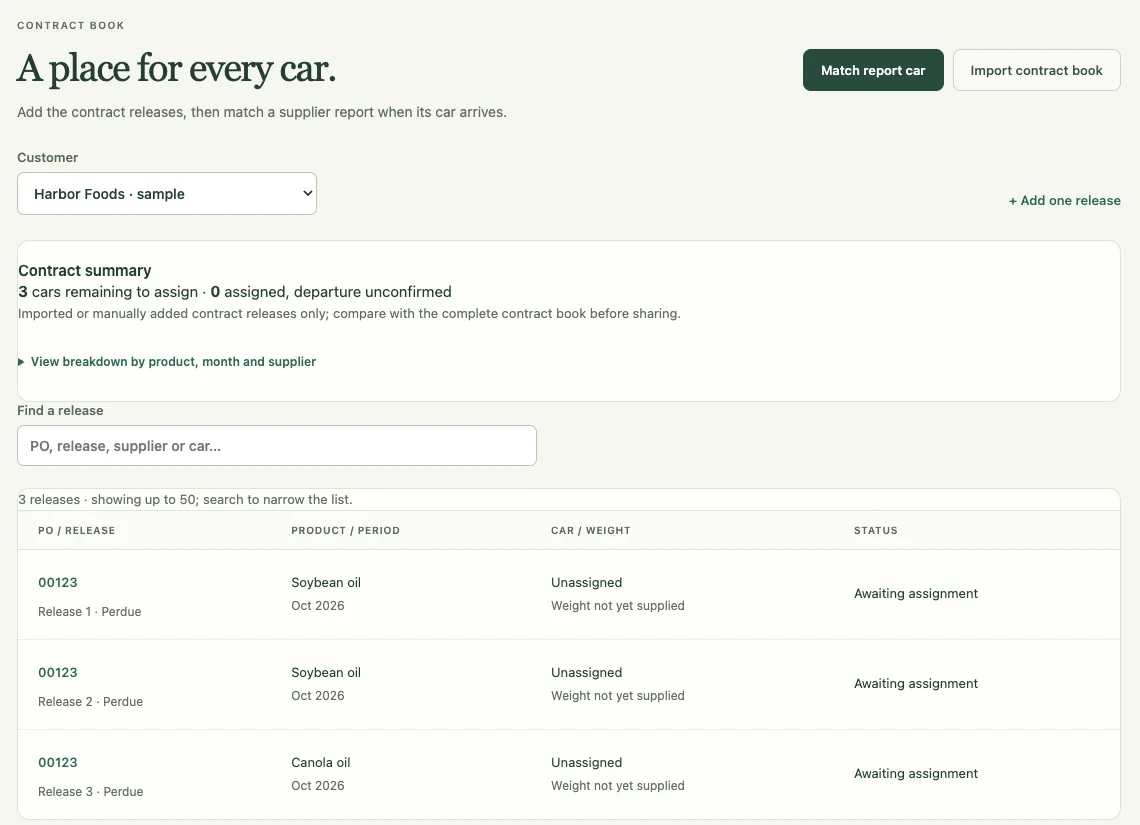
Contracts, orders, and shipments share their context. Pricing, quantities, and delivery milestones can be followed through the work rather than reconstructed from separate notes.
Proposed dates and other controlled changes wait for approval. The existing approved record remains intact, and the history preserves what changed, who acted, and why.
Supported supplier reports can be matched to shipments, with ambiguous rows held for review. Missing weights become persistent tasks. Customer PDFs and spreadsheets are prepared from approved snapshots, with internal notes kept out.
WHAT WORKS TODAY
BUILT WITH
Node.js · SQLite · Better Auth · PDF & Excel exports · GPT API / Outlook MCP / Asana MCP (original workflow)
Last reviewed October 2026